
You’ve just noticed a brown patch on the floor of your pool, discoloration along a wall, or spots that don’t disappear when you brush them. Where did they come from?
Pool stains can develop for several reasons, including leaves, other organic debris, and even metals in the water. Before reaching for a brush or adding another chemical, though, it’s important to figure out what you’re dealing with. The source of a stain can determine the best way to remove it, and—even more importantly—help you prevent it from returning.
Here are some of the most common causes of pool staining that homeowners in Clay County tend to encounter.
What Causes Stains in a Swimming Pool?
Most pool stains fall into one of two broad categories: organic stains and metal stains.
Organic stains come from leaves, berries, pollen, and other plant matter that remain in contact with a pool’s surface. Metal stains occur when dissolved metals in the water react and leave behind discoloration.
What Causes Organic Pool Stains?
Florida’s landscaping and year-round vegetation can introduce plenty of organic material into an outdoor pool. When these materials settle on a pool’s floor or steps, they may create brown, green, or other discoloration. Heavy rain and wind can make this noticeable by depositing more debris into the pool at once.
Mild organic stains may improve through brushing, proper sanitation, and consistent water chemistry once you identify (and remove) the source. Stains that are more stubborn may require additional treatment depending on the pool surface and the material that caused them. Removing a stain without correcting the conditions that caused it may only provide a temporary solution.
What Causes Metal Stains in a Pool?
Metals can enter pool water from several sources, including the water used to fill the pool, certain pool chemicals, and corroded metal components.
Iron and copper are the most common metals associated with pool staining. Iron may produce reddish-brown, orange, or rust-colored stains, while copper can sometimes create blue-green or darker discoloration. Changes in water chemistry can cause dissolved metals to oxidize or otherwise come out of solution and deposit onto pool surfaces.
Treatment may involve products designed to lift or reduce metal staining, as well as methods for managing dissolved metals in the water. Addressing a stain will depend on the type of metal, its concentration, the pool surface, and water chemistry.
Note: Adding chemicals without first identifying the problem can backfire. An inappropriate treatment may fail to remove the stain or create additional water-balance problems. If you suspect metal staining, test the water or have it professionally evaluated.
Because it’s possible that staining is related to problems with the actual pool surface rather than organic debris or metal exposure, color isn’t always enough to diagnose what you’re seeing. It’s also possible that a “stain” isn’t really a stain at all, but algae.
Is It a Pool Stain or Algae?
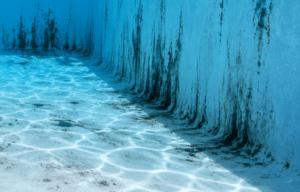
Algae can produce yellow, green, brown, or dark discoloration on pool surfaces. Black algae may appear as stubborn dark spots that don’t brush away easily and can be mistaken for staining.
Knowing the difference matters because algae is a living organism that requires proper sanitation and treatment. Trying to remove it like you would a simple surface stain usually won’t solve the underlying problem.
If you’re unsure about what you’re seeing, water testing and a closer inspection can help determine the appropriate next step.
Can Unbalanced Pool Water Cause Stains?
Improper pH levels and other chemical imbalances can create conditions that affect pool surfaces or encourage dissolved metals to leave deposits. Water that isn’t properly balanced can also contribute to scaling, corrosion, and other forms of discoloration that may initially look like stains.
Regular pool maintenance can keep chlorine and pH at appropriate levels, manage alkalinity and other water-quality factors, and protect pool surfaces and equipment.
How Can You Prevent Pool Stains?
It may be unrealistic to expect to avoid any staining over the life of your pool, but consistent maintenance can reduce the conditions that allow many of them to develop.
This maintenance includes:
- Removing leaves and organic debris
- Brushing pool surfaces
- Verifying proper filtration and circulation
- Testing and balancing water chemistry
- Inspecting a pool for settled debris after heavy storms
If testing identifies metals in the water, managing them appropriately can also help prevent recurring discoloration.
Should You Pressure Wash or Scrub Pool Stains?
Pool surfaces vary considerably, and a cleaning method that’s appropriate for one material may damage another. Excessively abrasive scrubbing, inappropriate chemicals, or pressure washing can affect certain finishes.
Start with the least aggressive appropriate treatment with consideration of the pool’s surface material. When you’re unsure, professional evaluation is safer than experimenting on the finish.
When Should a Pool Stain Be Professionally Evaluated?
Consider having the problem evaluated when a stain keeps returning, covers a large area, doesn’t respond to routine cleaning, or you can’t tell whether you’re seeing a stain, algae, scaling, or surface damage.
A professional evaluation can help identify the likely cause before treatment begins, which is especially important when stronger chemicals or treatments could affect the pool finish.
We Can Help You Keep Your Pool Clean and Stain-Free
As you’ve learned, pool stains come from many sources. Organic debris, metals, algae, water chemistry, and surface conditions can produce similar-looking discoloration but require very different solutions. Identifying the cause first gives you a much better chance of treating the problem effectively and preventing it from coming back.
If you’re noticing unexplained stains or discoloration in your pool, contact Elite Pool Service. We can evaluate your water and overall pool condition and recommend the appropriate next step.