
How long does pool equipment last? Your pump, filter, heater, and other equipment all have different expected lifespans. Factors like maintenance, water chemistry, usage, installation, and operating conditions can also influence how long each one performs.
Florida homeowners may operate pool equipment throughout much of the year. Understanding the age and condition of your equipment can help you recognize when maintenance is needed and when repair or replacement may be worth considering.
How Long Does Pool Equipment Typically Last?
Below are some general ranges for pool equipment lifespan, which should be treated as estimates rather than expiration dates. A component that has reached a certain age doesn’t automatically need to be replaced, just as relatively new equipment can develop premature problems.
Pool Equipment | General Lifespan or Replacement Interval |
Pool pump | Replacement may become more likely after 7 years, particularly if performance problems develop (source: Pentair) |
Cartridge filter element | About 2–3 years under normal conditions (source: Jandy) |
Sand filter media | About 5–7 years (source: Jandy) |
Pool heat pump | Around 10 years, although some last longer |
Salt chlorine generator cell | Around 10,000 operating hours, or roughly 5 years of average use (source: Pentair) |
Automatic pool cleaner | Varies significantly based on type, use, and maintenance |
Automation equipment | Varies based on system, environment, and component wear |
Manufacturer recommendations and your equipment’s actual condition should always factor into when something needs service or replacement.
What Affects Pool Equipment Lifespan?
How frequently pool equipment operates can affect its lifespan, particularly for components like pumps, heaters, cleaners, and salt chlorine generator cells. Proper sizing and installation affect whether equipment works under the conditions it was designed for.
Routine maintenance also matters. Clogged baskets and filters can restrict water flow. Improper water chemistry can encourage scale or corrosion. Substantial organic debris, weather, and unresolved leaks can add further stress.
Condition and performance are often as important as age when evaluating equipment.
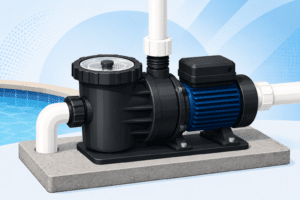
How Long Does a Pool Pump Last?
A pool pump regularly moves water through your circulation and filtration system, making it one of the hardest-working components, especially in the summer. A pump may operate for many years if it’s properly installed and maintained. As it ages, you may notice performance issues like increased noise, difficulty starting, reduced water flow, repeated loss of prime, visible leaks, or frequent repairs.
You can sometimes fix or replace a pump’s motor, seals, and other components separately, rather than the entire unit, based on pump age, condition, and repair history.
How Long Does a Pool Filter Last?
When evaluating a pool filter, it’s important to distinguish the filter tank from the material performing the filtering. If your system relies on filter cartridges, they may need replacing every two to three years; for sand, every five to seven.
The filter tank can last much longer if it’s in good condition. Watch for cracks, leaks, damaged components, unusual pressure changes, or declining filtration.
The EPA recommends cleaning residential pool filters based on need rather than an arbitrary schedule. Watching the pressure gauge and following manufacturer guidance can help avoid unnecessary cleaning.
How Long Does a Pool Heater Last?
Pool-heater lifespan depends heavily on the equipment type. Some pool heat pumps may last around 10 years or longer, while gas-heater longevity can vary based on operation, water chemistry, water flow, corrosion, scale, installation, and maintenance.
How Long Does a Salt Chlorine Generator Cell Last?
A saltwater pool relies on equipment to produce its sanitizer, and the salt chlorine generator cell will wear over time. Its lifespan will vary according to how heavily it operates, system sizing, water chemistry, and scale buildup. A cell that works harder to meet a pool’s chlorine demand may accumulate operating hours faster than one used under less demanding conditions.
How Long Do Automatic Pool Cleaners Last?
Automatic pool cleaner lifespans can vary considerably. One running frequently in a pool with heavy debris may wear out faster than one used occasionally in easier conditions. Cleaner type, pool surface, maintenance, and operating environment all play a role. Depending on the model, you may be able to replace hoses, brushes, wheels, tracks, or other components.
How Long Does Pool Automation Equipment Last?
Automation systems can control pumps, heaters, lighting, schedules, valves, and other pool features. Unlike a filter cartridge or salt cell, they don’t have a predictable replacement interval based on use.
Instead, their longevity depends on the system, installation, electrical conditions, weather exposure, and individual electronic or mechanical components.
Signs of age can include unresponsive controls, failed sensors, intermittent operation, or equipment that no longer follows programmed schedules. Because automation systems can involve electricity and multiple connected components, a qualified professional should evaluate electrical repairs.
Does Florida Weather Affect the Lifespan of Pool Equipment?
In Clay County, pools may operate year-round. High temps, heavy rain, humidity, debris, and frequent summer use can all affect how pool equipment operates and how much maintenance it requires. Keeping baskets and filters clear, maintaining adequate circulation, and monitoring equipment performance can help you spot problems before they escalate.
Can Proper Maintenance Extend Pool Equipment Life?
Regular maintenance—even something as simple as keeping skimmer and pump baskets clear—can help prevent avoidable wear and keep your pool equipment operating properly. Clean filters as needed, address leaks, and maintain the proper water level. Water chemistry also matters, so monitor chlorine, pH, alkalinity, and other measurements.
Should You Repair or Replace Aging Pool Equipment?
It depends. An older pump may develop a relatively minor problem but remain reliable with a quick fix. If that same pump starts failing repeatedly, has outdated technology, or requires an expensive fix, replacement may be better.
To know which option is better, you’ll need to consider the equipment’s:
- Age
- Overall condition
- Repair history
- Energy efficiency
- Current performance
You’ll also want to consider the availability of replacement parts and whether malfunctioning components are affecting other parts of the pool system.
A professional evaluation can help determine whether repair or replacement is recommended.
What Are Signs Pool Equipment May Need Replacement?
Pool equipment may need to be replaced if it:
- Repeatedly leaks or breaks down
- Makes increasingly loud or unusual noises
- Shows declining circulation, filtration, or heating performance
- Shuts down frequently or displays error messages
- Shows visible corrosion, cracks, or deterioration
- Fails to perform as well as before despite maintenance
We recommend seeking qualified help to evaluate these symptoms, especially when they involve electrical or heater problems, or significant plumbing issues or leaks.
A skilled technician will also consider how your pool’s components are working together. What looks like a pump problem, for example, may be related to filtration, water level, restricted flow, or another part of the circulation system.
Keep Your Pool Equipment Running Properly
Pumps, filters, heaters, salt cells, cleaners, and automation systems all age differently based on use and maintenance. Knowing the age of each component can be helpful, but pay just as much attention to how it performs. Changes in water flow, filtration, heating, noise, leaks, or reliability may indicate that maintenance, repair, or replacement is needed.
If you’re noticing changes in your pool equipment or want help keeping your system properly maintained, give us a call!