
Fall pool maintenance looks a little different in Florida than it does in much of the country. While homeowners in colder climates may be preparing to close their pools for the season, those of us in Clay County can often continue enjoying ours well into fall. So, how can you keep your water clean and equipment working properly as the weather eventually cools? Here are eight factors to keep in mind.
1. Keep Leaves and Other Fall Debris Out of Your Pool
Plenty of organic material can find its way into your pool, especially on windy days. We’re talking leaves, pine needles, and acorns, to name a few. It’s a good idea to remove that debris promptly so that it doesn’t break down in the water, increase the demand for sanitizer, or interfere with your skimmer and filtration system. If that material sits against pool surfaces for too long, it may also contribute to stains.
Regularly skim the water and check your skimmer baskets so that leaves and other debris don’t have a chance to accumulate.
2. Continue Testing Your Pool Water
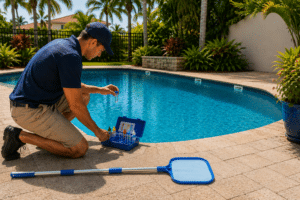
It’s not surprising if cooler temps make you taper back on pool use, but your water chemistry will still need attention. Chlorine, pH, and other water-quality factors can change based on sunlight, weather, and the debris we just mentioned. Instead of assuming your pool needs the same chemical routine it did in summer, test the water and adjust based on its current condition.
Knowing how often pool chemicals should be checked can help you establish a schedule while recognizing when weather or other conditions make additional testing necessary.
3. Adjust Your Pool Pump Schedule
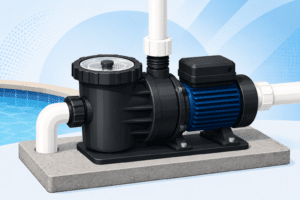
Your pool pump keeps water circulating through the filtration system and helps distribute chemicals. Its appropriate runtime can change depending on the time of year and may be influenced by factors like pool size, equipment, water temperature, swimming frequency, and organic debris.
4. Watch for Algae
“Algae season” doesn’t end with fall. We’ll still get plenty of warm, sunny weather that can support algae growth when sanitizer levels drop or circulation and filtration aren’t keeping up.
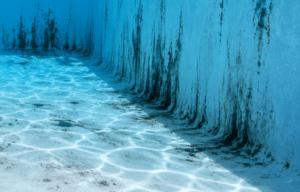
Watch for changes in your pool’s appearance, including yellow algae or stubborn dark spots that may indicate black algae. Addressing these problems early is much better than letting them spread.
5. Keep an Eye on the Weather
Hurricane season officially continues through November 30, and afternoon storms may still add fresh water and introduce leaves, pollen, dirt, and other contaminants. After significant rainfall, remove debris and check how it’s affected your pool chemicals before deciding whether adjustments are needed.
In the event that a tropical storm or hurricane threatens the area, take the appropriate steps to prepare your pool.
6. Inspect Your Pool Equipment
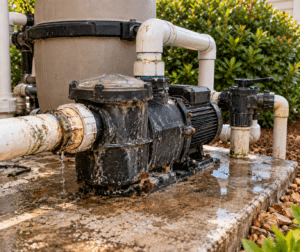
After a busy summer, your pool equipment may need some attention. Make sure that your pump and filter are operating normally. Empty skimmer and pump baskets as needed. Look around visible plumbing and equipment for signs of water loss. If you notice changes in water flow, unusual noises, or visible leaks, it may be worth having them checked before they become larger problems.
7. Don’t Ignore Changes in Your Pool’s Water Level
Evaporation is one reason swimming pools naturally lose water, and that rate can be different based on temperature, humidity, and wind.
If you notice you have to add more water than expected, it may not be due to seasonal weather, but to an equipment, plumbing, or structural problem. Knowing what can cause your pool to lose water, and how to do a simple bucket test, can help you distinguish evaporation from a possible leak.
8. Keep Brushing and Cleaning Pool Surfaces
Because your pool can collect debris and buildup when not in use, we recommend continuing to brush the walls, steps, and other surfaces as part of your fall maintenance routine. Pay particular attention to areas where debris tends to settle or circulation may be weaker.
Regular cleaning can also help you spot algae, stains, and other potential issues early on.
Keep Your Pool Ready Throughout the Fall
Fall pool maintenance should involve testing your water, removing debris, maintaining proper circulation and filtration, and keeping an eye on your equipment. A little consistency can keep your pool clean and ready to enjoy, no matter the season.
If you’d rather have a professional handle your routine pool care, our team is ready to lend a hand! Contact us to learn more about our services.